For decades, gold has dominated the conversation around precious metals investing, often seen as the ultimate safe haven. Yet beneath the surface, silver has quietly positioned itself as one of the most compelling opportunities for forward-looking investors. As global markets evolve and new technological demands reshape commodity cycles, silver is stepping into the spotlight with renewed momentum. Unlike gold, which is primarily held for wealth preservation, silver exists at the intersection of investment and industrial necessity. This dual role gives it a unique advantage, especially in a world increasingly driven by innovation, electrification, and sustainability. For investors willing to look beyond tradition, silver presents a dynamic and potentially high-growth alternative that could outperform gold over the next decade. Understanding why silver is gaining attention requires more than a surface-level comparison. It demands a deeper exploration into its supply dynamics, industrial applications, market behavior, and long-term positioning within the global economy. For beginners and seasoned investors alike, silver may represent a rare combination of accessibility, utility, and upside potential.
A: Silver has both precious-metal demand and industrial demand, and it often shows stronger percentage moves during bullish cycles.
A: Usually yes, because silver is typically more volatile and can experience larger price swings in both directions.
A: Not necessarily; many investors choose to own both, with each serving a different role in diversification.
A: For convenience, many beginners use silver ETFs, while physical coins and bars appeal to those who want direct ownership.
A: It shows how many ounces of silver equal one ounce of gold and is often used to compare relative value between the two metals.
A: Physical silver itself does not pay dividends or interest, which is why it is often paired with income-producing assets.
A: It can be, because silver is bulky and heavy compared with gold for the same dollar amount.
A: No, mining stocks are businesses with operational and financial risks that can make them behave differently from the metal.
A: Ignoring premiums, storage realities, and volatility while assuming a low per-ounce price automatically means low risk.
A: Yes, when used thoughtfully as part of a diversified strategy rather than as a short-term speculation driven by hype.
The Dual Identity That Sets Silver Apart
One of the most important distinctions between silver and gold lies in their fundamental roles. Gold is primarily a monetary asset, valued for its ability to store wealth and hedge against economic uncertainty. Silver, on the other hand, carries both monetary and industrial significance, making it far more sensitive to economic growth and technological advancement.
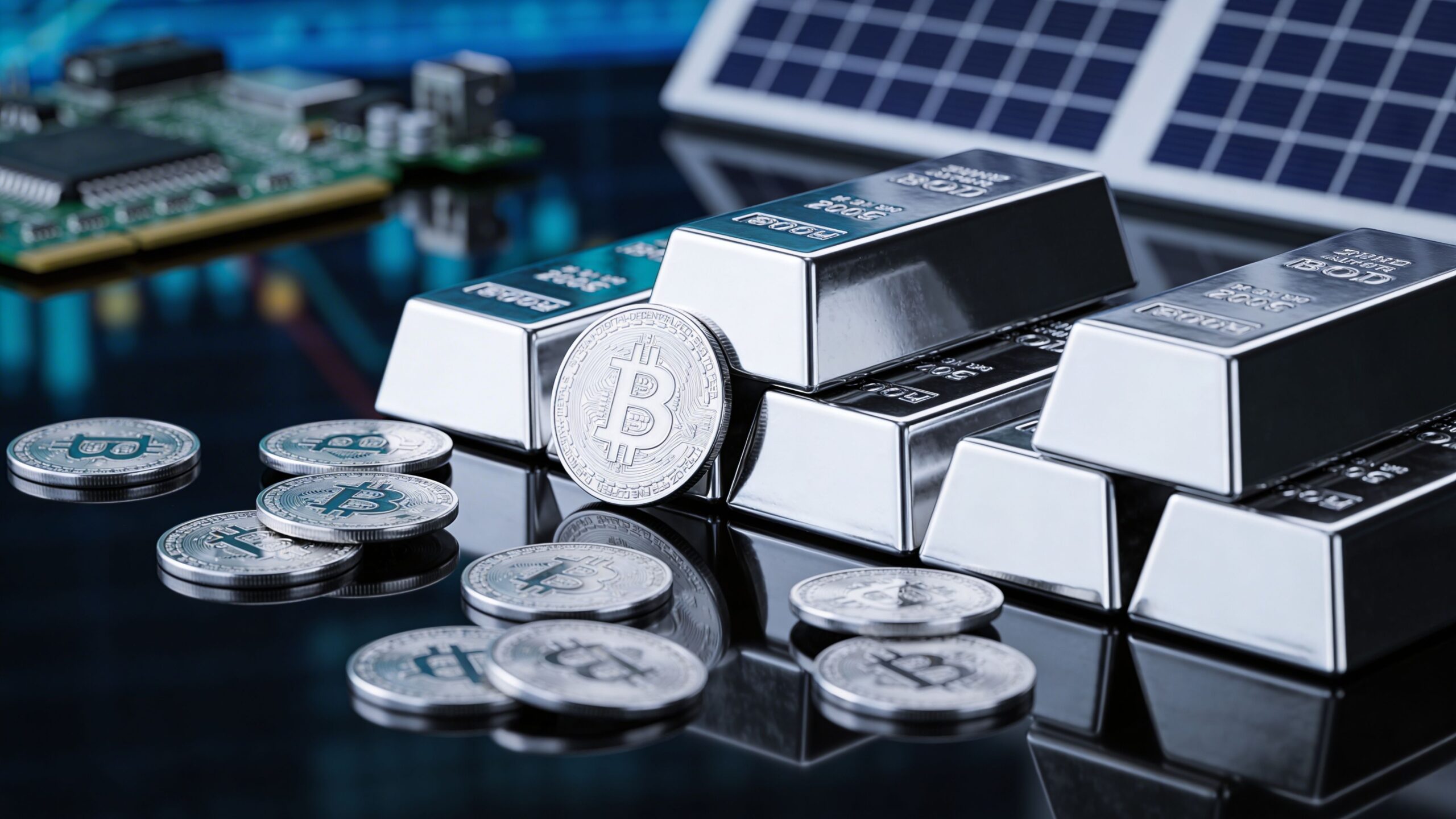
Roughly half of global silver demand comes from industrial applications. It is a critical component in electronics, solar panels, electric vehicles, and medical devices. As industries continue to innovate and expand, the demand for silver grows alongside them. This creates a powerful feedback loop where economic progress directly fuels silver consumption.
At the same time, silver retains many of the monetary characteristics that make gold attractive. It has been used as currency throughout history and is still considered a store of value in times of financial instability. This dual identity allows silver to benefit from both economic expansion and defensive investment behavior, positioning it uniquely within the precious metals market.
Supply Constraints and the Case for Scarcity
While demand for silver continues to rise, its supply story is becoming increasingly complex. Unlike gold, which is often mined specifically for investment and jewelry purposes, a significant portion of silver production comes as a byproduct of mining other metals such as copper, lead, and zinc. This means that silver supply is not always directly responsive to its own price movements.
As a result, even when silver prices increase, production may not ramp up as quickly as investors expect. This structural limitation can create supply shortages, particularly during periods of heightened demand. Over time, these imbalances have the potential to drive significant price appreciation.
Additionally, above-ground silver inventories have been steadily declining. Much of the silver used in industrial applications is not economically recoverable, effectively removing it from circulation. This gradual depletion adds another layer of scarcity, reinforcing the long-term bullish case for silver.
In contrast, gold is often recycled and stored, with a large percentage of all gold ever mined still in existence. This difference highlights silver’s unique position as both a consumed resource and an investment asset, further strengthening its potential for future outperformance.
The Green Energy Revolution and Silver’s Rising Demand
One of the most powerful drivers of silver’s future growth is the global transition toward renewable energy. As governments and corporations invest heavily in clean technologies, silver has emerged as a critical material in this transformation.
Solar energy, in particular, relies heavily on silver due to its unmatched electrical conductivity. Each solar panel contains small amounts of silver, and as solar adoption accelerates worldwide, the cumulative demand becomes substantial. With ambitious climate goals pushing for widespread renewable deployment, silver demand is poised to expand significantly over the coming years.
Electric vehicles also contribute to this trend. Silver is used in various components, including battery systems and electrical connections. As the automotive industry shifts toward electrification, the need for silver continues to grow in tandem.
These structural demand drivers are not short-term trends but long-term shifts that could define the next decade. For investors, this means that silver is not just reacting to market cycles but benefiting from transformative global changes that support sustained growth.
The Gold-to-Silver Ratio and Market Opportunity
A key metric often used by investors to evaluate the relative value of silver compared to gold is the gold-to-silver ratio. This ratio measures how many ounces of silver are required to purchase one ounce of gold. Historically, the ratio has fluctuated widely, reflecting changing market conditions and investor sentiment.
When the ratio is high, it suggests that silver may be undervalued relative to gold. In recent years, the ratio has remained elevated compared to historical averages, indicating potential upside for silver if it reverts toward its long-term norm. This reversion could occur through rising silver prices, falling gold prices, or a combination of both.
For investors seeking opportunities, the gold-to-silver ratio provides valuable insight into market positioning. It highlights periods when silver may offer greater value and growth potential compared to its more established counterpart.
While no single metric should dictate investment decisions, the ratio serves as a useful tool for identifying trends and understanding the broader dynamics between these two metals. In the current environment, it reinforces the argument that silver may be poised for a period of relative outperformance.
Volatility, Opportunity, and Strategic Positioning
Silver is often described as a more volatile version of gold, and this characteristic can be both a risk and an opportunity. Price movements in silver tend to be more pronounced, especially during periods of market uncertainty or rapid economic change. While this volatility may deter some investors, it also creates opportunities for those who are prepared to navigate it strategically.
In bullish market conditions, silver has historically outpaced gold in terms of percentage gains. This is partly due to its smaller market size, which allows for more dramatic price movements when demand increases. For investors looking to capitalize on growth, this amplified potential can be particularly आकर्षive.
However, volatility also requires discipline. Short-term price swings can be significant, making it important to maintain a long-term perspective and avoid reactive decision-making. By focusing on underlying fundamentals and maintaining a balanced portfolio, investors can harness silver’s volatility as a tool rather than a liability.
Strategic positioning involves understanding when to increase exposure and when to remain patient. For beginners, this often means starting with a modest allocation and gradually building a position over time, allowing for both learning and risk management.
Practical Ways to Start Investing in Silver
For those ready to explore silver investing, there are several accessible entry points that cater to different preferences and investment styles. Physical silver, including coins and bars, offers a tangible form of ownership that many investors find reassuring. It provides direct exposure to the metal and can serve as a long-term store of value.
Exchange-traded funds provide a more convenient option, allowing investors to gain exposure to silver prices without dealing with storage or security concerns. These financial instruments can be easily traded through brokerage accounts, making them ideal for those seeking flexibility and liquidity.
Another avenue is investing in silver mining companies. These investments offer indirect exposure to silver prices while also incorporating the performance of individual businesses. While this approach introduces additional risks, it can also provide enhanced returns during favorable market conditions.
Regardless of the method chosen, it is important to approach silver investing with a clear strategy. Understanding your financial goals, risk tolerance, and time horizon will help guide your decisions and ensure that your investments align with your broader objectives.
A Decade of Opportunity Waiting to Be Seized
As the global economy continues to evolve, silver stands at the crossroads of innovation, sustainability, and financial strategy. Its unique combination of industrial demand and monetary value positions it as a compelling asset for the years ahead. While gold will likely remain a cornerstone of wealth preservation, silver offers a different kind of opportunity—one rooted in growth and transformation. The next decade may bring significant shifts in how resources are valued and utilized. With its critical role in emerging technologies and renewable energy, silver is well positioned to benefit from these changes. For investors willing to embrace its potential, the rewards could be substantial. Building a position in silver is not about replacing gold but complementing it. By recognizing the strengths of each metal and incorporating them into a balanced strategy, investors can create a portfolio that is both resilient and forward-looking. In a world defined by change, silver may prove to be one of the most exciting opportunities in the precious metals space.